
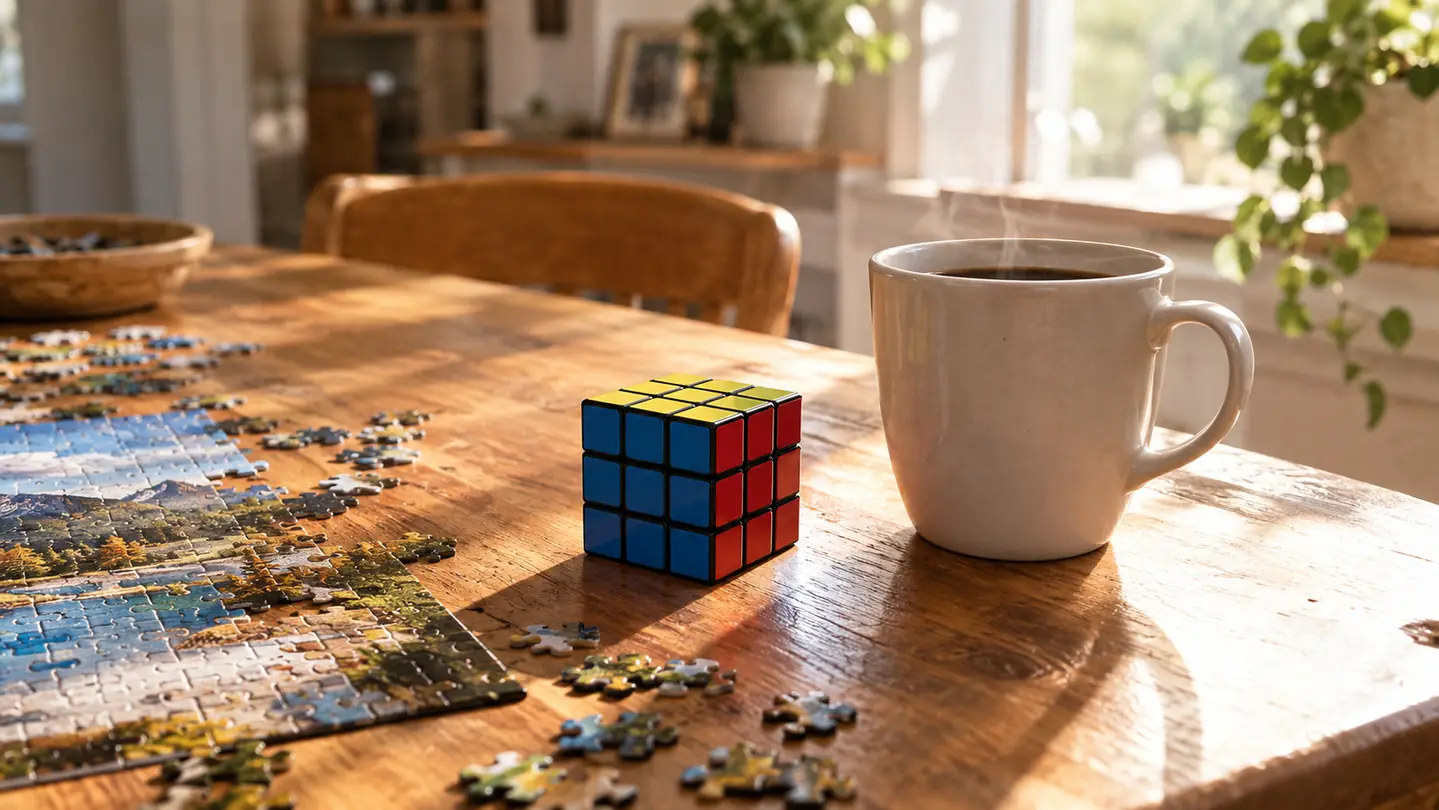
I have a confession that will not surprise anyone who spent thirty years teaching middle school math: I keep a Rubik's cube on the kitchen windowsill, and I solve it most mornings with my coffee. The old cube I owned for years was a frustration machine. It caught on every turn, it popped apart if I went too fast, and by the end of one solve my wrists ached. So when I ordered the Rubik's Magnetic Cube, I expected a slightly nicer version of the same thing. Months later, I can tell you it is a different animal entirely. I bought it for myself before I ever thought of it as a gift, and I am glad I did, because now I can speak from experience.
This review is based on about five months of real use, not a weekend of testing. The cube has been solved hundreds of times, dropped on the dining room table, carried to my monthly game night, and borrowed by grandkids from ages six to fifteen. It has survived all of it. If you are trying to decide whether this is the cube to buy for yourself or for a gift, here is what I learned.
The Quick Verdict
The best-feeling Rubik's cube I have owned in forty years of puzzling, and the one I now buy as a gift for anyone who fidgets.
Amazon Check Today's Price →A cube that turns the way it should
If you are tired of a stiff, popping cube that jams on every other turn, the Rubik's Magnetic Cube is the upgrade. It is the cube I reach for every single morning.
Amazon Check Today's Price on Amazon →How I've Used It
Most mornings I do a solve or two with my coffee before Gus is even awake. I timed myself with my phone for the first month, because I am a retired math teacher and that is exactly the kind of thing I do. I kept a little notebook of times, because that is what I do. My average dropped from around two minutes to about fifty-five seconds. That is not speed-cuber territory by any stretch, but for someone who learned to solve the cube in the 1980s, it felt like a real triumph.
The cube also goes to game night. My book club friends know better than to hand me a puzzle they want back quickly. Two of them have ordered their own since, and one, who swore she could never solve a cube, now keeps one in her car for when she is waiting in the pickup line at school. That is the kind of recommendation that means something.
The grandkids are the real test. The nine-year-old figured out how to solve one face on her own and now insists on showing me every time she visits. The fifteen-year-old borrowed it for a week and returned it with a comment about how smooth it turns. The six-year-old just likes to twist it and listen to the click. A gift that holds the attention of a six-year-old and a fifteen-year-old is rare in my house.
What the Magnets Actually Do
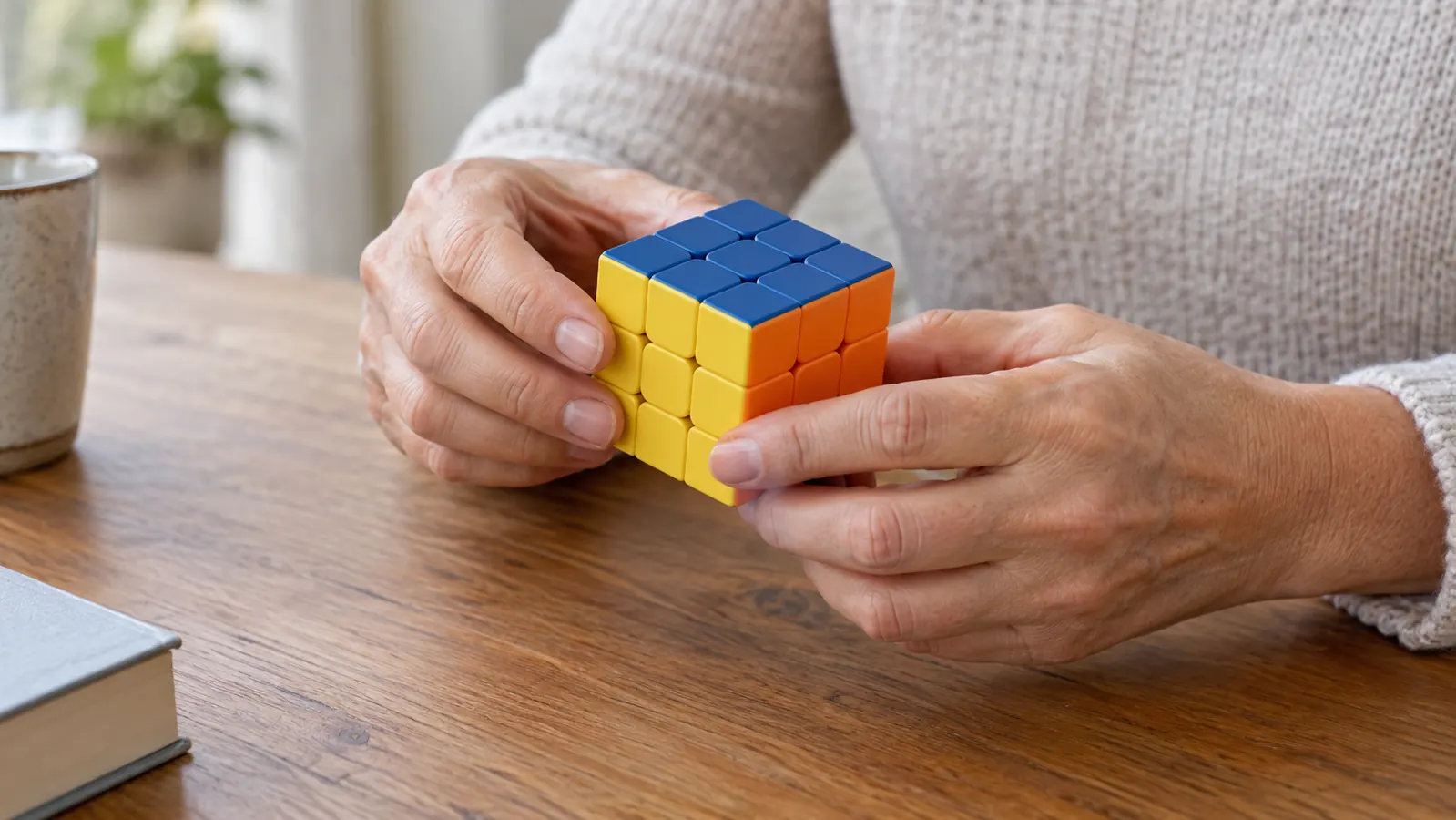
Here is the part I was skeptical about, because I assumed magnets were a gimmick. I was ready to be disappointed, and I was wrong. The magnets sit inside the cube and pull each layer into place as it turns. When a face is almost aligned, it clicks home on its own instead of hanging up half a turn short. That small assist changes the whole experience, because you no longer have to line everything up perfectly before you twist.
The other thing the magnets do is let the cube corner cut. That is the term for turning a face when the layers underneath are not perfectly lined up. On my old cube, that move would jam and I would have to wiggle it free. On the Rubik's Magnetic Cube, it just goes. You can be sloppy with your turns and the cube forgives you. For a beginner, that is the difference between frustration and fun.
The feel is hard to describe if you have only ever used a cheap cube. The turns are smooth and soft, with a gentle click at the end of each move. It is quiet enough that I can solve it while Gus watches the news, and he has never once asked me to stop. The magnets also give it a satisfying weight, so it feels like a real tool rather than a toy.
How It Holds Up After Months of Use
I will be honest about the abuse this cube has taken. It has been dropped on a hardwood floor at least three times. It has been knocked off the arm of the sofa. It has been twisted by small hands with no regard for gentle handling, and once it spent an afternoon in a backpack next to a juice box. I do not baby my puzzles, and this one has rewarded that. After all of it, the cube still turns as smoothly as the day it arrived. The only sign of wear is a faint scuff on one corner from the hardwood floor drop, and it does not affect the turning at all. Nothing has popped out, nothing has cracked, and the faces still look brand new.
If you are reading this, there is a good chance you own a cube that lives in a drawer, the one from a holiday gift exchange or a drugstore checkout line. I had one of those too. The difference is immediate. The cheap cube turns in uneven jerks, and the pieces catch on each other. The Rubik's Magnetic Cube turns in a smooth, continuous motion, and the magnets carry each face the rest of the way.
The other difference is the weight. The cheap cube feels hollow and light. This one has a solid heft that makes it feel like a real instrument. I handed it to a friend at game night without saying anything, and the first thing she said was, "this feels expensive." It does. That is the whole point.
I should also say that the Rubik's name matters to me. I taught math for thirty years, and the Rubik's cube was the first puzzle I ever loved. The name on the box is the name I trust, and the quality matches it. When I hand this cube to someone, I am not handing them a gamble. I am handing them the same puzzle that has been challenging people for more than forty years, updated to feel the way it always should have.
Why It Works for Beginners and Non-Puzzlers
You do not need to know how to solve a cube to enjoy this one. My husband Gus is the proof. He is not a puzzler. He will do a crossword on a rainy Sunday and that is about it. But he picks this cube up during every commercial break. He calls it his thinking cube. He has no interest in solving it. He just likes the way it feels in his hands, the click of the magnets, the simple satisfaction of turning something that turns perfectly. That is the fidget factor, and it is real.
For actual beginners, the magnets are a quiet teacher. Because the cube aligns itself, you can focus on learning the moves instead of fighting the hardware. I taught the nine-year-old to solve one face in an afternoon, and I am convinced the forgiving feel is part of why she stuck with it. A stiff, catchy cube would have ended that lesson in tears.
I bought this cube for the puzzling, but I have to admit the fidgeting is half the value. There is something about the click of the magnets that keeps your hands busy while your brain wanders. I pick it up during phone calls, while I wait for water to boil, and during the slow parts of a book club meeting. It is the first fidget toy I have owned that does not feel like a toy.
Gus noticed this before I did. He pointed out that I reach for the cube the way other people reach for their phones. He is not wrong. The cube lives on the kitchen windowsill, and I solve it in the two-minute gaps of the day. Those small moments add up, and they are the reason this cube has seen more use in five months than my old cube saw in five years.

What I'd Change
No review from me is complete without the cons, so here they are. If you are a serious speed cuber, this cube is probably not your final destination. The magnets are not adjustable, and the tension is not tunable the way it is on competition cubes. You will likely want something more advanced, and there is a separate comparison on this site that goes into that in detail.
The other honest con is that this cube is hard to put down. That sounds like a joke, but it is not. My jigsaw progress has slowed noticeably since this cube arrived, because I reach for it during the ten-minute gaps I used to spend on the puzzle. If you are looking for a gift for someone who already owns a high-end speed cube, this is a small upgrade rather than a leap, and they might prefer to pick their own.
I also looked at cheap knockoff cubes before I settled on this one, and I am glad I did not save the money. The knockoffs I tried had rough edges, uneven turns, and a hollow feel. The Rubik's brand cube costs more, but it is the difference between a tool you use and a thing you throw in a drawer. For a gift, I would rather spend a little more and know it will actually get played with.
What I Liked
- Magnets make every turn smooth and forgiving, even for beginners
- Sturdy enough to survive months of daily use, drops, and small children
- Quiet, satisfying feel that makes it a genuinely great fidget toy
- Trusted Rubik's name, which matters when you are buying a gift
- Held the attention of grandkids from ages six to fifteen
Where It Falls Short
- Serious speed cubers will want a more advanced cube with adjustable magnets
- It is hard to put down, which has slowed down my jigsaw progress
- If you already own a high-end speed cube, this is a modest upgrade, not a leap
Five months in, it still turns as smoothly as the day it arrived, and my solve time has been cut in half.
Who This Is For
Buy this for yourself if you own a stiff, frustrating cube and you want to remember why puzzling is fun. Buy it for a grandkid, a niece, a nephew, or any kid who fidgets. Buy it for the adult in your life who has a Rubik's cube on a shelf and picks it up during phone calls. It is the rare gift that works for a six-year-old and a sixty-year-old, and in my experience it is still being played with a month later, which is the standard I judge every gift by. It has earned a permanent spot on my gift list.
I have bought a lot of puzzle gifts over the years, and I judge every one by the same rule: is it still being played with a month later? Most puzzles fail that test. This cube passes. I have given it to two grandkids and a friend from book club, and all three still have it out where they can reach it. That is a better track record than any other gift I have bought this year.
The other reason I trust it as a gift is that it does not require instructions. A puzzle that needs a manual is a puzzle that ends up in a drawer. A Rubik's cube needs no explanation. Everyone knows what it is, and everyone picks it up. The magnets make sure the first experience is a good one, which is exactly what you want from a gift.
Who Should Skip It
Skip it if you are a serious speed cuber looking for a competition-grade cube with adjustable tension and custom magnets. Skip it if you want the exact feel of the 1980s original, because the magnets do change the experience. And skip it if you are shopping for a toddler, because the turns, while forgiving, still require the fine motor control of an older child. That is not a criticism, just a warning from someone who has been there. For everyone else, this is the cube I recommend without hesitation.
The cube I now buy for every grandkid
After five months of daily use, this is the puzzle gift I trust. It turns smoothly, it survives real life, and it actually gets played with.
Amazon Check Today's Price on Amazon →