

I have a confession that will not surprise anyone who has watched me shop for birthday presents. I am the grandmother who stands in the puzzle aisle comparing boxes for twenty minutes while my husband Gus waits by the register. For years I bought the budget speed cubes, the no-name ones with the cartoon robot on the front. They were cheap, they ended up under couch cushions, and I figured that was fine. Then one of the grandkids asked for a Rubik's cube for their birthday, the real one, and I had to decide whether the name on the box actually mattered. After a year of testing both side by side, I can tell you it does, but not always in the way you would expect.
Here is the short answer, the one I give friends at game night when they ask which cube to put on a birthday list. If you are buying for a kid who wants to learn, or for anyone who will solve it a few times and set it on a shelf, the Rubik's magnetic cube is worth the extra money. It turns better, it feels better, and it survives the drop test. If you are buying for a hobbyist who already owns three cubes and talks about lubrication and tension, save your money, because they will take anything apart and rebuild it anyway. This guide walks through both sides so you can pick the right one for your person.
| Rubik's Magnetic Cube | Budget Speed Cubes | |
|---|---|---|
| Turn feel | Smooth, consistent turns on every face right out of the box | Smooth at first, but gets scratchy and uneven within a few weeks |
| Magnets | Built-in magnets give a soft snap that helps you land each turn | No magnets at this level, so turns overshoot and need correcting |
| Durability | Survived a year of drops, throws, and homework-break abuse | Fine for light use, but one lost a center cap and another loosened up |
| Customization | Not designed for taking apart or tuning, and that is fine for most people | Adjustable tension and swappable pieces, made for tinkerers |
| Cost | Costs more up front, but you buy it once | Costs less, which matters when you are buying several at once |
| Gift appeal | A name everyone recognizes, and the box feels like a real present | Looks generic next to the brand-name option |
| Best for | First-time solvers, kids, and anyone who wants it to work immediately | Hobbyists and collectors who plan to mod and tune |
How I Tested These Cubes
I am not a speedcuber. I am a retired middle school math teacher who likes to keep her hands busy and her brain honest. I bought the Rubik's magnetic cube for one of the grandkids last spring, and I bought two budget speed cubes from different brands around the same time, the kind you find in the checkout aisle at the big box store. I kept one of each at my house for game night and gave the others away. Over the year I watched which ones got picked up, which ones got solved, and which ones got shoved to the back of the drawer. I kept notes in the same notebook I use for my jigsaw puzzle progress, because that is the kind of person I am.
My test subjects were honest. The grandkids, ages six to fifteen, used them during homework breaks and after school. My game night friends, most of whom have not touched a cube since the 1980s, used them while we talked. I used mine every morning with coffee. I did not time my solves with a stopwatch. I paid attention to the things that actually decide whether a cube gets used: how it feels in the hand, how it sounds, whether it catches, and whether it survives being dropped on a hardwood floor. I also paid attention to which cube people reached for when they did not know I was watching. That is where the truth shows up. I also noticed that the budget cubes sounded different, clickier and harsher, while the Rubik's cube made a softer sound that was easier to listen to during a long game night.
Where Rubik's Wins
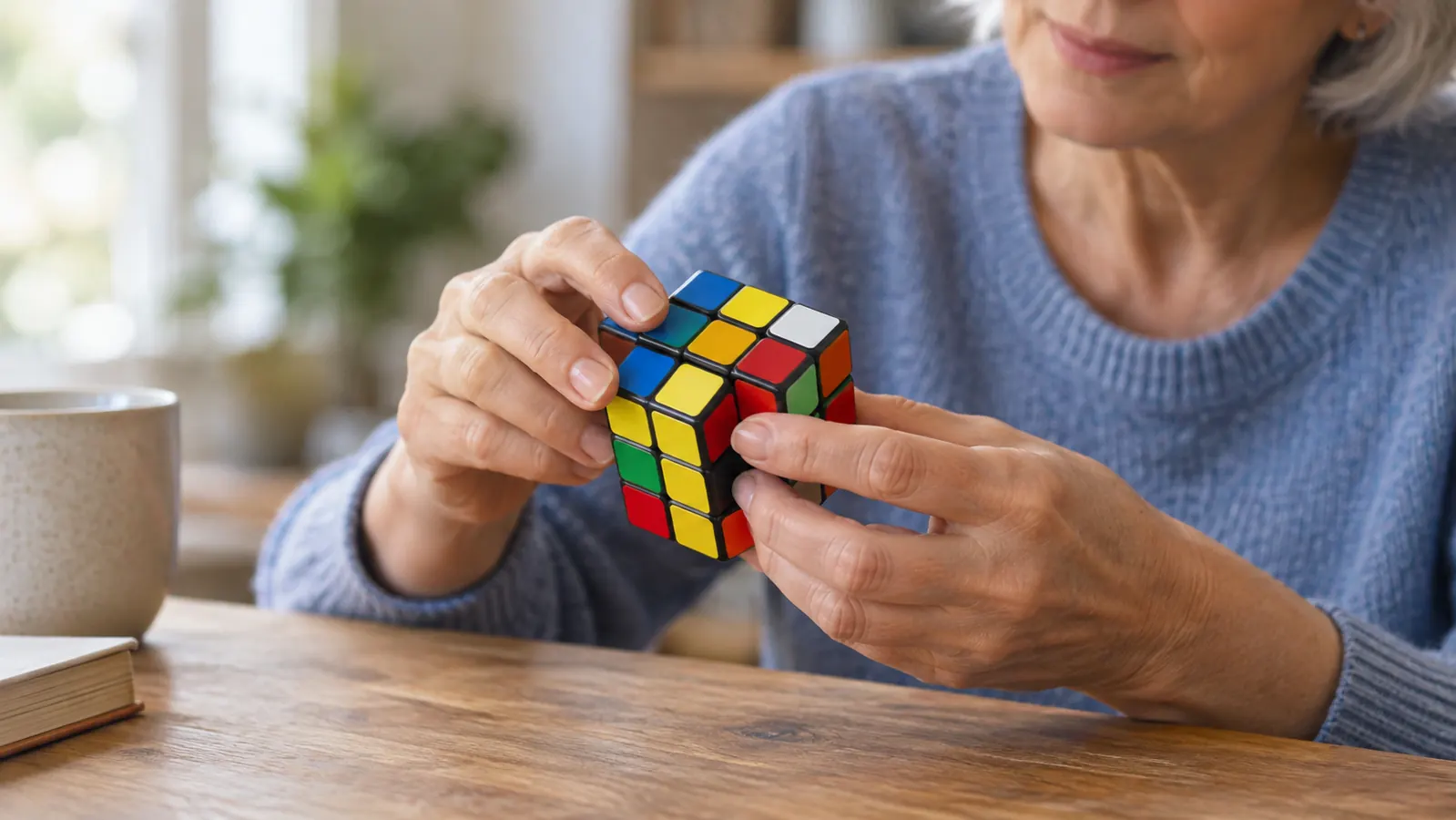
The first thing you notice is the turning. The Rubik's magnetic cube turns smoothly on every face from the first twist, with no break-in period required. The magnets add a soft snap at the end of each turn, so you can feel when a layer is lined up without looking at it. For a beginner, that feedback is gold. The youngest grandkid, who is six, could line up a face correctly because the cube told their fingers when the turn was done. No budget cube I tested did that. The turning is the first thing everyone comments on, even people who have never solved a cube in their life. They pick it up, twist it once, and say that feels nice. Nobody said that about the budget cubes.
The durability surprised me. I expected the name-brand cube to be delicate, the kind of thing you handle with care and keep in the box. Instead it has survived a year of being dropped, thrown onto the couch, and used as a fidget toy during homework. The budget cubes got scratchy, one lost a center cap, and another developed a loose layer that made it frustrating to solve. The Rubik's cube still turns the way it did on day one. For a gift that will live in a backpack or on a car seat, that matters. I will admit I dropped it on purpose a few times, just to see. It never even popped a piece.
There is also the gift factor, and I do not mean the box. Kids know the Rubik's name. When one of the grandkids opened their birthday present and saw the brand on the packaging, they did the little nod that says this is a real gift, not a filler present. The cube itself has to live up to that moment, and it does. A budget cube, no matter how well it turns, does not carry that weight. For a birthday or a holiday, that matters more than most people admit.
Where Budget Speed Cubes Win
I will be honest about the other side, because it is a real side. Budget speed cubes cost less, and when you are buying for a classroom, a birthday party, or a beach house where things get sandy and lost, that matters. You can buy several budget cubes for what one Rubik's costs, and nobody cries when one goes missing. I have bought budget cubes by the handful for game night prizes, and they were perfect for that. The stakes were low, and the fun was the same.
The bigger reason to consider a budget cube is customization. Speed cube hobbyists do not treat a cube as a finished product. They take it apart, adjust the tension, add lubrication, and swap pieces. Budget cubes are built for that kind of tinkering, and the community around modding them is large. The Rubik's magnetic cube is more like an appliance. It works beautifully out of the box, but it is not designed to be taken apart and tuned. If your person is already a hobbyist, they will probably take your gift apart anyway, so save your money and let them pick their own.
Give the cube that actually gets solved
The Rubik's magnetic cube is the one that stayed on the table all year while the budget cubes went back in the drawer. For a first cube, a gift, or a fidget toy that holds up, it is the pick I keep making.
Amazon Check Today's Price on Amazon →Who Should Buy Which
Buy the Rubik's magnetic cube if you are shopping for a kid who wants to learn, a friend who mentioned wanting to get back into puzzles, or anyone who will use it a few times a week and wants it to feel good. It is also the right call when the gift itself matters, because the name on the box lands well and the cube inside lives up to it. For a first cube, I would not hesitate.
Buy a budget speed cube if you are buying for a serious hobbyist who already has a collection, or if you need several cubes at once and money is tight. They are also fine for an adult who just wants something to fiddle with at a desk and does not care about the feel. But if you are on the fence for a kid, spend the extra money. The difference in how often the cube gets picked up is the difference between a gift that gets used and a gift that gets lost.
One more note for grandparents specifically. If you are like me, you are not just buying a toy, you are buying something that gives you a reason to sit down with a kid and figure it out together. The Rubik's magnetic cube is the one I can hand to a grandkid and then sit across the table and solve alongside them. The budget cubes did not invite that. They felt like toys. This one feels like a puzzle, and that is the whole difference.

The Month-Later Test
I judge every gift I buy by one rule: is it still being played with a month later? The budget cubes failed that test with the younger grandkids. They got picked up once, solved or scrambled, and then forgotten. The Rubik's magnetic cube is the one they reach for while they wait for dinner or during a commercial. It lives on the coffee table, not in the toy bin. When I asked the oldest grandkid which cube they would want on a long car ride, they did not even look up from the Rubik's cube in their hands.
There is something about the feel of a good cube that makes it a habit. The magnets give just enough feedback that turning it is satisfying even when you are not solving anything. My game night friends picked it up between rounds. My husband Gus, who will tell you he is not a puzzler, has been caught turning it while he watches the news. That is the test that matters, more than any spec sheet.
What Nobody Tells You Before You Buy
The magnetic snap takes a day to get used to. If you learned on an old cube from the 1980s, the first few turns feel strange, like the cube is helping you. Within a week you will not want to go back, but the first session can feel odd. Also, this is not a competition speed cube. It is a great everyday cube, and it is faster than anything most of us need, but a dedicated speedcuber will eventually want something more specialized. For everyone else, this is the one.
One more thing. A cube is a fidget toy, whether the packaging says so or not. The Rubik's magnetic cube has spent more time being turned mindlessly during homework and phone calls than it has being solved. That is not a waste. That is the whole point. The best puzzle gift is the one that gets picked up every day, and this one does.
What About Other Cubes
If the person you are buying for is very young, you might wonder whether a 3x3 is too hard. A six-year-old can absolutely learn on this cube, especially with the magnetic feedback helping them line up turns, but some parents prefer to start with a smaller puzzle. That is a fair choice. The 3x3 is the classic, and it is the one I keep buying, but the age of the kid matters more than the brand.
And if the person you are buying for already solves a 3x3 without looking, they may want a different kind of challenge entirely. In that case, a budget cube is not the answer either. They will know what they want, and the best gift is to let them pick it out. For everyone else, for the kid who is curious and the adult who wants to try again, the Rubik's magnetic cube is the one I recommend.
Whatever you decide, avoid the novelty cubes that are shaped like animals or characters. They are fun for five minutes and then they sit in the drawer, because they do not turn well and they do not teach anything. A standard 3x3 cube is the right size, the right shape, and the right difficulty for almost everyone. That is not a controversial opinion. It is just what a year of watching real people use these things has shown me.
Still deciding? This is the one I keep buying.
After a year of testing, the Rubik's magnetic cube is the gift I reach for when I want a sure thing. It turns well, it holds up, and it gets used.
Amazon Check Today's Price on Amazon →