
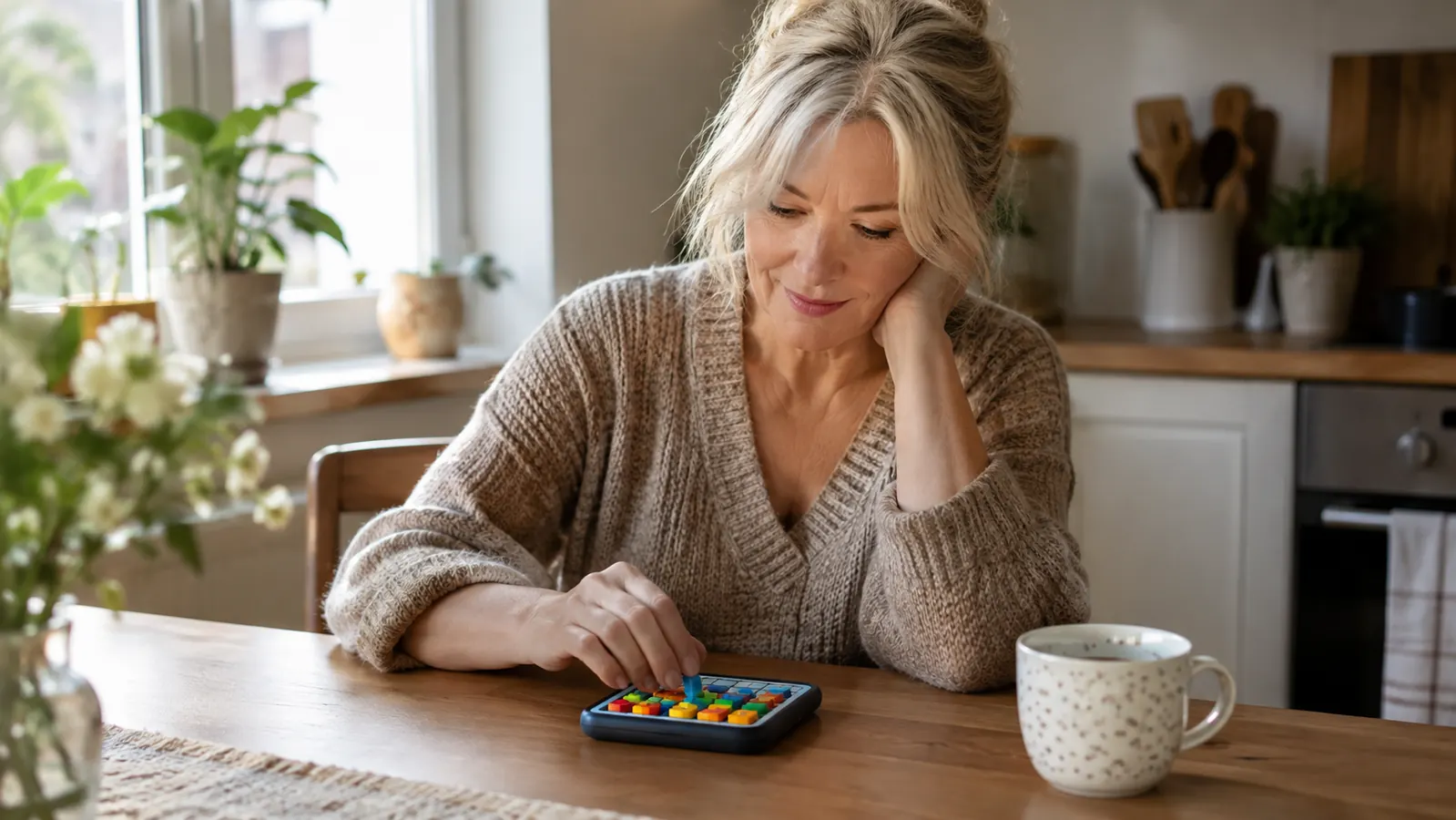
I have been a puzzler my whole life, and I will be the first to tell you that not every brain game deserves a spot on your table. Some are gimmicks you play once and forget. But a few earn their place, and the Educational Insights Kanoodle is one of them. It has been sitting on my dining room table since last October, and I keep coming back to it between jigsaw sessions. Here are ten honest reasons brain games are a smart hobby for adults, with a few notes on what actually works.
The brain game that earned a permanent spot on my table
After months of daily use, the Educational Insights Kanoodle is the puzzle I reach for with my morning coffee. It is small, satisfying, and harder than it looks.
Amazon Check Today's Price on Amazon →It gives your brain a workout without feeling like homework
The best brain games make you think hard without making you feel like you are back in a classroom. Kanoodle does exactly that. You look at a challenge, turn the pieces over in your hand, and suddenly twenty minutes have passed. It is the kind of focus that feels like play, not effort. I tried a few apps before this, and they all felt like chores with timers and streaks. This one has no nagging, just a problem sitting there waiting for you. On a rainy Tuesday in November I sat down to do one challenge before lunch and did not look up until Gus asked if I wanted tea. That is the kind of absorption a good puzzle earns.
It fits into a coffee break
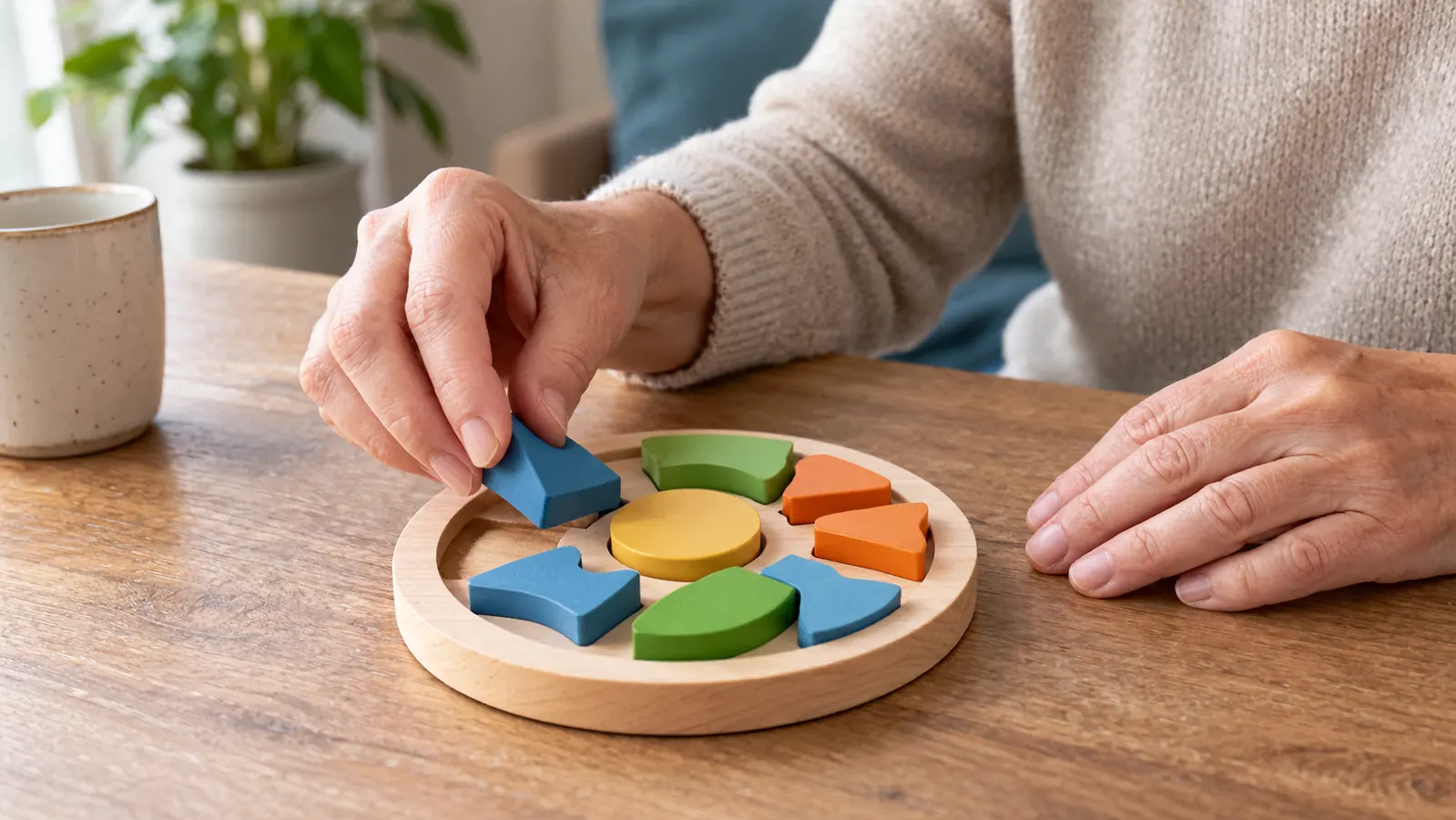
I do a puzzle with my morning coffee most days. The whole game is small enough to keep on the table, and a single challenge takes a few minutes or a few patient ones. You do not need to clear an afternoon to get something out of it. On busy mornings I tell myself I will do just one challenge, and most of the time I end up doing three before the coffee gets cold. The booklet has 200 challenges, so I have never once opened it and thought, I have already done this one. That variety is what keeps it on the table instead of in a drawer.
It is a gift that does not end up in the closet
I judge every gift I give by whether it is still being played with a month later. Kanoodle passes that test. I have bought it for friends and for my grandkids, and the ones who like a challenge keep coming back to it. My friend Diane texted me three weeks after her birthday to say she had finally beaten challenge 47 and was hooked. That is the highest compliment a puzzle can get. I gave one to my neighbor for Christmas, and when I stopped by in January it was sitting on her kitchen counter with the booklet open. That is how I know it is a keeper.
It works for a wide range of ages
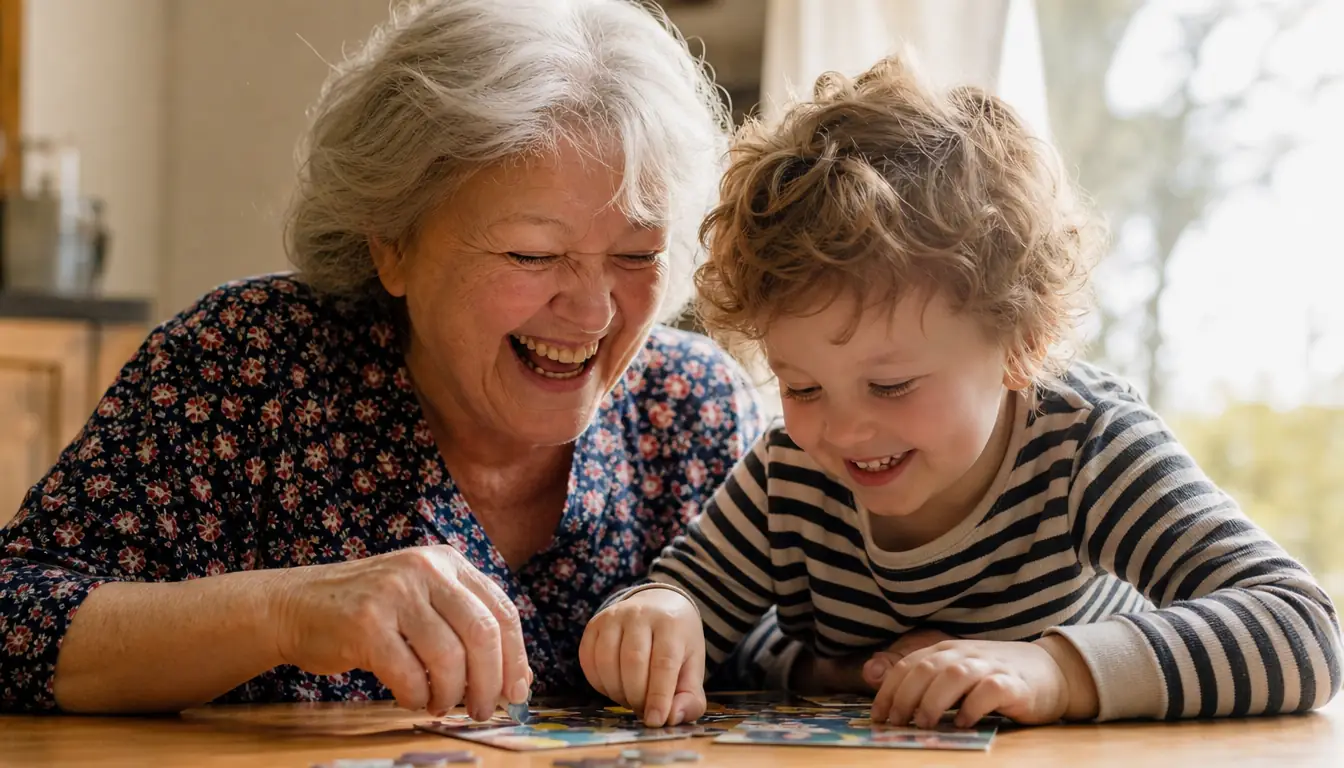
My grandkids range from six to fifteen, and this is one of the few games that holds their attention across that whole span. The younger ones start with the easier challenges, and the older ones race through the harder ones. Last month my six-year-old granddaughter sat with it for a full twenty minutes, which for her is an eternity. My fifteen-year-old grandson, who usually has his nose in his phone, asked to borrow it for the ride home. It is rare to find a puzzle that works for a six-year-old and a fifteen-year-old without feeling babyish for one of them.
It builds patience in a world that wants everything fast
There is no timer, no score, no notification. You just sit with a problem until you solve it. That is a skill we all need more of, and it is one of the reasons I keep recommending brain games to my friends who feel scattered. I have started keeping it on the side table instead of the bookshelf, because out of sight really does mean out of mind. When it is visible, I pick it up during the slow parts of the day instead of reaching for my phone. The first time I tried challenge 88, I failed it twice and had to walk away. Coming back the next morning and solving it in four minutes taught me more about patience than any app ever did.
It is portable enough for travel and waiting rooms
I take it to my monthly game night and to the doctor's office. It fits in a bag without taking over, and the pieces stay put. I brought it along on a long car trip to see my sister in March, and it kept me company while Gus drove. The pieces stayed in place the whole way, which is more than I can say for the bag of jigsaw pieces I once tried to bring along. If you are looking for a hobby that travels well, this is a strong choice.
It gives you a small win every time you solve one
There is something deeply satisfying about the click of the last piece sliding into place. Each solved challenge is a tiny victory, and stringing those together over a week is good for your mood. I notice the difference on days when I skip it. The harder challenges can take me a full evening, and the feeling when one finally clicks is worth every minute of staring at the pieces. Last week I solved challenge 141 just before bed, and I will admit I did a little fist pump. At my age, you take your victories where you can get them.
It is a conversation starter at game night
I host a monthly game night with friends from my book club, and Kanoodle always ends up in someone's hands. People who do not consider themselves puzzle people will pick it up, try one challenge, and suddenly everyone is passing it around. It is a nice icebreaker that does not require a long explanation. At our February game night, three people were crowded around the table trying the same challenge, and nobody touched their phone for an hour. My friend Carol, who swore she was not a puzzle person, asked to borrow it before she left.
It is a break from screens that still feels engaging
I love my tablet, but there is a difference between scrolling and doing. A physical puzzle engages your hands and your eyes in a way a screen does not. When I want to unwind without staring at a display, this is what I reach for. I have tried the digital versions of other puzzles, and they never hold me the same way. There is something about having the pieces in your hand that changes how you think. I have also noticed I sleep better on evenings when I spend twenty minutes with the puzzle instead of twenty minutes on my phone, and that alone is reason enough to keep it around.
It is a hobby you can share with someone else
Some hobbies are solitary by nature, but brain games are easy to share. My husband Gus will not call himself a puzzler, but he will sit down and try a challenge if I put one in front of him. My grandkids ask to play when they visit. A hobby that brings people to the table is a hobby worth keeping. Even my sister, who rolls her eyes at most of my puzzle talk, asked to borrow it for her flight home. She texted me from the airport to say she had finished three challenges before boarding. I count that as a win.
What I'd Skip
Not every brain game is worth your money. I would skip anything that relies on a gimmick, like a one-time trick or a puzzle you can solve in five minutes and never touch again. I would also skip games that need a phone app to work, because half the time the app stops being supported and the game becomes useless. And if a puzzle is marketed as a cure for your memory, walk away. No game is a substitute for sleep, exercise, and real conversation. A good brain game is a pleasant habit, not a cure.
I judge every gift by whether it is still being played with a month later, and the Educational Insights Kanoodle is one of the few that always is.
Start with the puzzle that keeps people coming back
Whether you are shopping for yourself or for a gift, the Educational Insights Kanoodle is a safe bet. It is the brain game I reach for daily, and the one I keep buying for other people.
Amazon Check Today's Price on Amazon →