
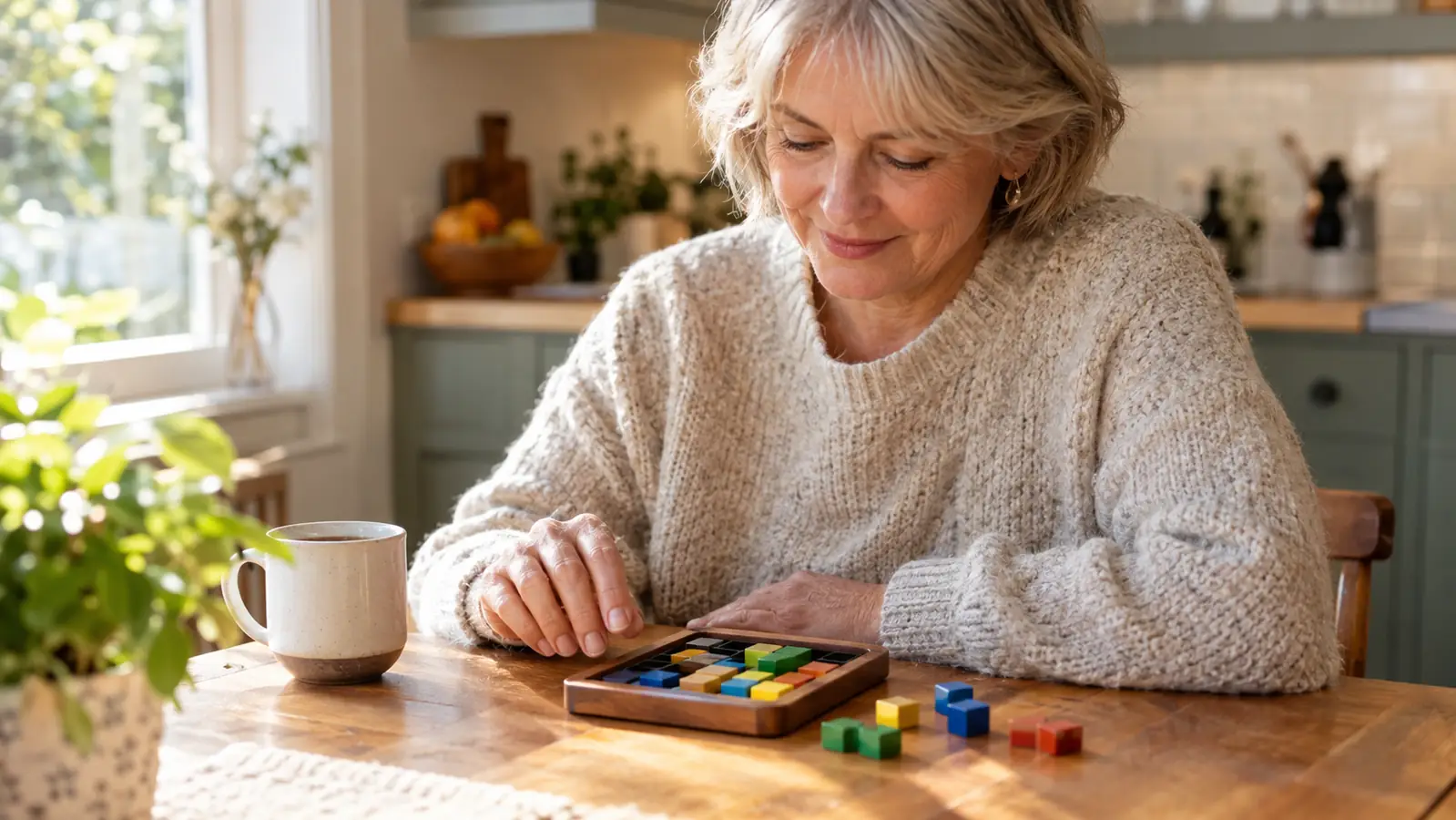
Every morning, before I do anything else, I pour a cup of coffee and spend ten minutes with a logic puzzle. I have done this for years, first as a middle-school math teacher and now as a retired grandmother of five who wants to stay sharp. When people ask me what actually works, I do not point to an app or a subscription. I point to a small box that sits on my kitchen table: the Educational Insights Kanoodle. It has lived there for months, which is the highest compliment I can pay any puzzle, because I judge a gift by whether it is still being played with a month later. This one passed that test the way almost no other puzzle has, and it is the answer I give when friends ask what I actually do to keep my mind sharp.
The reason it works is simple. A daily logic puzzle gives your brain a small, winnable challenge at a time of day when you actually have the energy for one. The Kanoodle packs more than two hundred challenges into a single little box, so you never run out, and it is the kind of thing you can leave out on the table and pick up for ten minutes at a time. No screen, no timer, no notifications. Just a tray, a booklet, and a handful of pieces that fit together one satisfying way. Here is the exact five-step routine that has kept me coming back to it for months, written the way I would explain it to a friend at my kitchen table.
Start Your Morning With a Puzzle That Actually Gets Finished
The Educational Insights Kanoodle is the puzzle I keep coming back to. Small enough to live on the table, hard enough to stay interesting, with more than 200 challenges in the box.
Amazon Check Today's Price on Amazon →Step 1: Choose a Puzzle That Lives Where You Will Actually See It
The biggest mistake people make is buying a puzzle and storing it in a drawer. Out of sight, out of mind, and in a month it is in the donate box. The Kanoodle is small enough to sit next to the coffee maker or on the corner of the dining room table. I keep mine beside the jigsaw I always have in progress, so I pass it a dozen times a day. Every time I pass it, I give it a glance. Every glance is a tiny invitation to sit down for two minutes.
There is something about seeing a puzzle that pulls you in. When I walk past the table, I slide a few pieces around for a minute while I wait for the kettle. That minute is the whole point. The habit does not need a big block of time. It needs a puzzle that is already out, already visible, and already asking to be touched. A puzzle in a drawer is a chore you are avoiding. A puzzle on the table is a friend you are passing.
The Educational Insights version comes with a case that doubles as the puzzle tray, which matters more than you would think. The pieces do not scatter. You can pick the whole thing up, move it to the couch, and put it back without a cleanup project. You can even take it to the car for a road trip, which I have done twice with a grandkid in the back seat. Low friction is everything when you are trying to build a daily habit, and this design understands that.
Step 2: Anchor It to Something You Already Do Every Day
I do my puzzle with my morning coffee. Not instead of anything. Just during the ten minutes while the coffee cools. The cue is already there, so I do not have to remember to puzzle. I sit down with the mug, and the tray is right there waiting. On busy mornings, that ten minutes is the calmest part of my day, and I protect it the way I protect any appointment. It is the difference between starting the day with a win and starting the day already behind.
Pick your own anchor. Maybe it is after dinner. Maybe it is while you wait for the water to boil. Maybe it is the five minutes before you leave for the day. The specific time matters less than the fact that it is attached to something you never skip. You are not adding a new task to your day. You are tucking a good one into a space that already exists, and that is why it survives the busy weeks.
Ten minutes is enough. I am not trying to beat the booklet in a week. I am trying to give my brain a workout that feels like play. When it stays fun, it stays daily. That is the whole approach, and it is not a complicated one. The puzzle does the heavy lifting because it is genuinely pleasant to pick up, which is more than I can say for most of the things we are told to do for our health.
Step 3: Start at the Level That Is Fun, Not the Level That Is Impressive
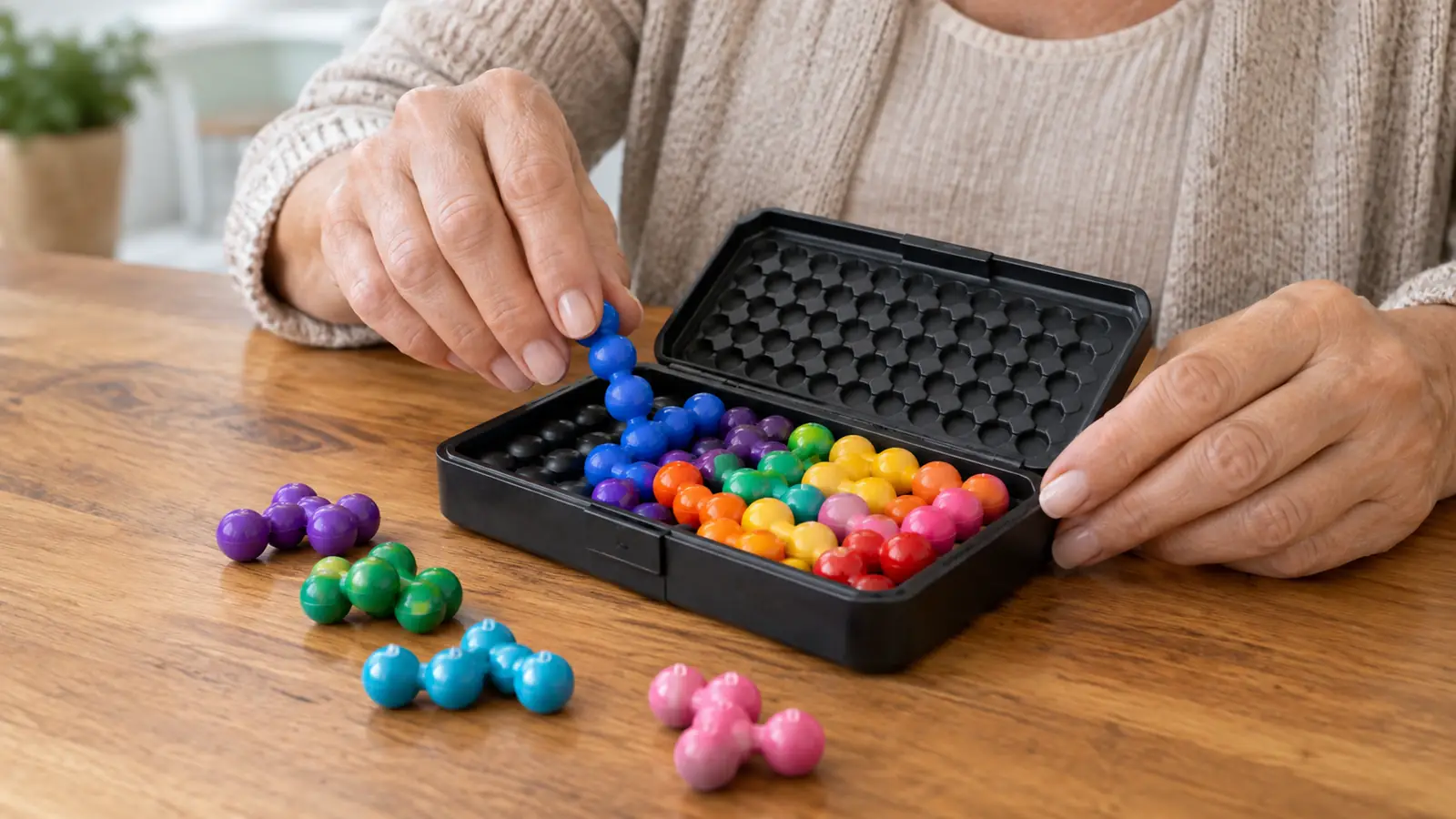
The Educational Insights Kanoodle has two kinds of challenges: 2D puzzles that lie flat in the tray and 3D puzzles that stack up in space. Everyone wants to start with the hard stuff. Do not. Start with the flat ones. The first few are easy enough that you will finish one in a couple of minutes, and that small win is what builds the habit. You need to feel successful before you feel challenged, and the booklet is arranged so you can.
I learned this from years in a classroom. Kids do not fall in love with subjects they are bad at, and adults are no different. If the first puzzle makes you feel slow, you will not come back tomorrow. So do the easy ones first. Feel smart. Then nudge up. I have watched grown adults put the Kanoodle down in frustration because they started on challenge forty. The puzzle is not the problem. The starting point was.
I work through the booklet in order on most days, and I skip around when I want something different. Some days I want the comfort of an easy solve. Other days I want to wrestle with a 3D challenge for twenty minutes. There is no wrong way to use it. But starting easy is the way that keeps you coming back, and coming back is the entire goal. Everything else is decoration.
Step 4: Keep a Loose Record So You Can See the Progress
I keep a small spiral notebook in the kitchen drawer, the same kind I used for thirty years of lesson plans. Every time I finish a challenge, I jot down the number and the date. That is it. No times, no stars, no pressure. It takes five seconds, and it does something surprising: it turns a habit into evidence. Some people use their phone for this. I like paper, and I like the ritual of writing the date in my own handwriting. It feels more permanent, and permanence is the point.
Here is what happens after two weeks. You have a page full of small victories. On days when my brain feels slow, I flip back and see that I have solved forty challenges this month. That is the record of a mind that still works. That is worth more than any score, and it is the kind of proof you cannot argue with on a tired day. You do not have to take anyone's word for it. The page says so.
The record also tells you when to push. When the easy challenges stop feeling interesting, you know it is time for the 3D ones. The notebook is not about competition. It is about noticing that you are improving, because improvement is quiet when you live inside your own head. A date and a number make it loud, and loud is what you need on the days you doubt yourself.
Step 5: Make It Social Before It Becomes a Chore
The habit really locked in for me when I brought the Kanoodle to my monthly game night. My book club friends and I trade it around the table like a passing game. One person reads the challenge, and everyone takes a turn trying to place the pieces. You would be amazed how competitive a retired math teacher and her friends get over a little tray. There is shouting. There is cheering. There is absolutely no shame.
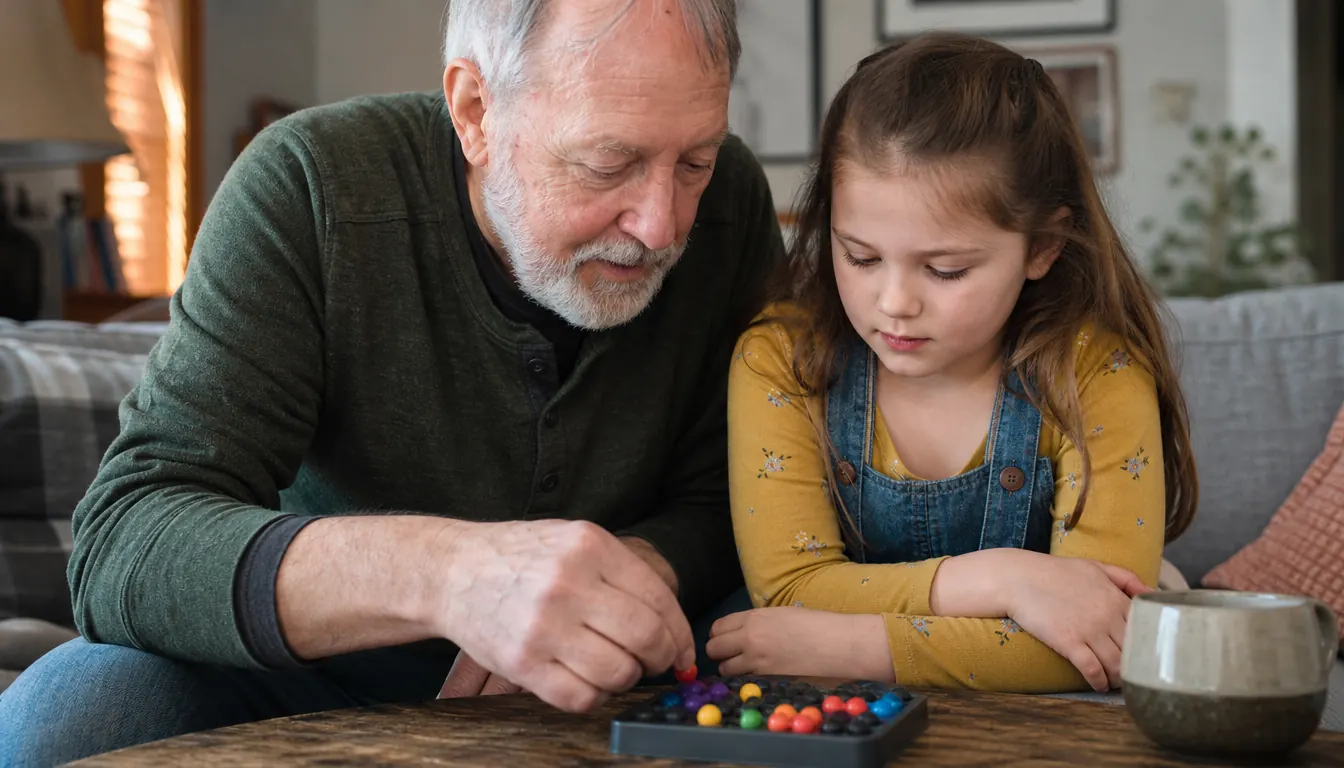
The grandkids got into it too. The six-year-old likes the easy 2D challenges, and the fifteen-year-old races through the 3D ones. A puzzle that spans six to sixty-one is a rare thing. It means the game gets played long after the birthday excitement wears off, which is exactly how I judge every gift I buy. If it is still on the table a month later, it was a good gift. If it is in the closet, it was a mistake.
When a puzzle becomes something you do with other people, it stops being a chore and starts being a small ritual. The competition keeps it lively. The company keeps it warm. And the puzzle itself keeps showing up, because it is small enough to live on the table and hard enough to never get boring. That combination is rarer than you would think.
What If You Miss a Day
Miss a day. It is fine. The puzzle will be there tomorrow, and the notebook will not scold you. I have missed days during holidays, during a visit from the grandkids, and during one glorious week where I read three novels in a row. The routine bends. It does not break.
The only thing that kills a daily habit is the belief that one missed day means you have failed. It does not. You have just had a day with other things in it. The next morning, the coffee is hot and the tray is still on the table, and ten minutes later you are back in the habit. That is the quiet magic of leaving the puzzle out where you can see it.
The other thing that helps is rotation. When I am bored with one kind of challenge, I switch to the other side of the booklet. When I am bored with the whole thing, I set it aside for a week and come back fresh. Absence makes the puzzle interesting again, and the notebook is right there to prove that I will, in fact, come back.
What Else Helps
A daily logic puzzle is one good habit, but I would be giving you a false picture if I said it was the whole story. I also do a crossword with Gus in the evening, even though he insists he is not a puzzler. I keep a jigsaw on the dining room table, a tradition my mother started and I never stopped. I walk most mornings, and I sleep a reasonable number of hours. The puzzle is one thread in a rope, not the whole rope. None of it is dramatic. All of it is daily, and daily is what adds up.
The research on brain health points the same direction as common sense: variety matters. A puzzle that gets your brain working is great. A puzzle plus walking plus talking with friends plus a good night of sleep is better. The Educational Insights Kanoodle is the part of my routine that is the most fun, so it is the part I never skip. That is not a small thing. The habit you enjoy is the habit you keep.
One honest note: no single puzzle is a guarantee of anything. I am a retired math teacher, so I believe the mental exercise does some good, but I am not going to oversell it. What I can tell you is that ten minutes of something hard and playful beats ten minutes of scrolling on my phone, every single day. That is a trade I will take, and it is the honest reason this little box is still on my table.
Ten minutes of something hard and playful beats ten minutes of scrolling on my phone, every single day.
What I Would Tell a Gift Shopper
If you are here because you are shopping for a puzzle lover, buy the Kanoodle for the right reason. It is not a toy you hand over and forget. It is a tool that works best when it lives somewhere visible, and it rewards the person who picks it up for ten minutes a day. I have given it to three grandkids and two friends, and the ones who keep it on a table still play with it. The ones who put it in a drawer do not, and that is on the drawer, not the puzzle.
It also travels well, which makes it a good choice for a gift that has to survive a car ride or a visit to a grandparent's house. The case keeps the pieces together, and the booklet means the recipient never has to wonder what to do next. I would rather give a puzzle that comes with two hundred built-in instructions than one that expects the recipient to invent their own fun.
One more thing I have learned from thirty years of teaching and a lifetime of gift giving: the best brain games are the ones that do not feel like homework. The Kanoodle feels like a game. It looks like a game. It gets passed around like a game. That is exactly why it is still played with, and that is the whole story. I would rather give one good puzzle than a stack of half-hearted ones.
Make the Kanoodle Your Ten-Minute Daily Ritual
It is the puzzle I reach for before I reach for my phone. If you want a small daily challenge that actually stays fun, this is the one. I have bought it for three grandkids and two friends, and it is the gift I keep reordering.
Amazon Check Today's Price on Amazon →